Why Your Dog Ignores You (And How to Fix It)
It is a scenario every dog owner knows well: you are at the park, you call your dog’s name, and they don’t even twitch an ear. It feels personal, frustrating, and even embarrassing. You might think your dog is being stubborn, dominant, or simply “naughty.” However, the reality is usually much simpler. When a dog ignores commands, it is rarely about defiance and almost always about a breakdown in communication, motivation, or environment.
Understanding the root cause of this disconnect is the first step toward building a reliable relationship where your dog listens the first time, every time.
The Science of Why Dogs Stop Listening
Dogs are masters of association. They do what works for them. If your dog is ignoring you, it is because they have learned that whatever they are doing (sniffing a patch of grass, looking at a squirrel) is more rewarding than listening to you.
1. Lack of Generalization
Humans understand that “Sit” means “Sit” whether you are in the kitchen or at a busy intersection. Dogs do not naturally generalize. If you only train in your quiet living room, your dog may genuinely not understand that the command applies in a noisy park.
2. Competing Motivations
If your dog is chasing a ball and you call them to come, you are asking them to give up a high-value activity for… what? If the reward for coming to you is just a pat on the head or, worse, the end of the walk, the dog will choose the ball every time.
3. Command Overexposure (Nagging)
If you say “Sit, sit, sit, SIT!” and your dog finally sits on the fourth attempt, you have accidentally taught them that they don’t need to listen to the first three. This is known as “command poisoning” or “nagging.”
Core Reasons for Ignoring Commands
To fix the behavior, you must identify which of these common pitfalls is affecting your training:
| Reason | Explanation |
| Environmental Distraction | The environment is too “loud” for the dog’s current training level. |
| Low Value Rewards | You are offering kibble when the situation requires “steak-level” rewards. |
| Confusion | Your body language contradicts your verbal command. |
| Fear or Stress | A dog in “fight or flight” mode cannot physically process commands. |
How to Fix It: A Step-by-Step Guide
If your dog ignores commands, you need to “reset” your training protocol. Follow these steps to regain their focus.
1. Increase the Reward Value
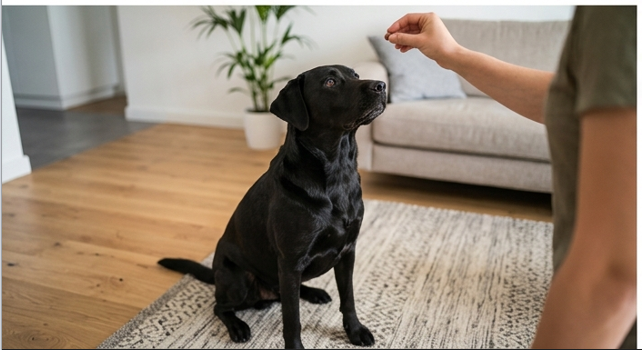
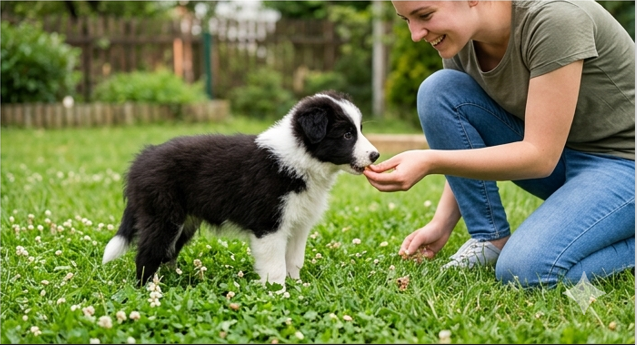
Stop using boring treats for difficult tasks. When training in high-distraction environments, use “high-value” rewards like small pieces of boiled chicken, cheese, or their favorite squeaky toy. The reward must be better than the distraction they are ignoring.
2. Stop Repeating Yourself
This is the hardest habit for owners to break. Give a command once. If the dog does not respond:
- Do not repeat it.
- Wait 5 seconds.
- If they still don’t respond, use a “lure” (like a treat to their nose) to guide them into the position, or move to a less distracting area and try again.
- Never reward a dog that only listens after the third or fourth repetition.
3. Train for “Distance, Duration, and Distraction”
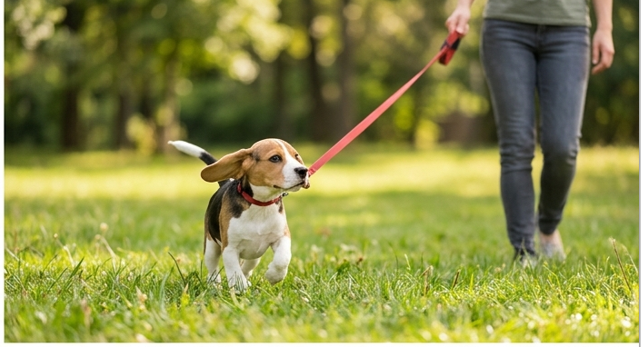
Professional trainers call these the “3 Ds.” You cannot expect a dog to stay for 5 minutes (Duration) if they can only stay for 5 seconds. Slowly build up the difficulty. Start in a hallway, move to the backyard, then a quiet street, and finally the park.
4. Check Your Energy and Body Language
Dogs are incredibly sensitive to our tone. If you sound angry or frustrated when you call your dog, they may ignore you because they are afraid of the “vibe” you are putting off. Keep your voice light, upbeat, and inviting.
The “Check-In” Game: Building Focus
One of the best ways to ensure your dog stops ignoring you is to teach them that paying attention to you is a game.
- Step 1: While on a walk, wait for your dog to look back at you voluntarily.
- Step 2: The second they make eye contact, say “Yes!” and give a high-value treat.
- Step 3: Repeat this until the dog starts “checking in” with you every few minutes.
By rewarding unprompted attention, you are conditioning your dog to keep one eye on you at all times, making it much easier to get their attention when you actually need to give a command.
When It Might Be a Medical Issue
If a previously well-trained dog suddenly starts ignoring you, it might not be a training issue at all.
- Hearing Loss: Older dogs may be losing their hearing.
- Pain: A dog with hip dysplasia may ignore a “Sit” command because it hurts to get into that position.
- Cognitive Decline: Senior dogs can suffer from canine cognitive dysfunction (similar to dementia), making them appear “spaced out.”
If the behavior change is sudden, a trip to the vet is always the first logical step.
Summary Action Plan
| Objective | Strategy |
| Fix Nagging | Say the command only once. |
| Boost Motivation | Use high-value treats (Chicken, Cheese). |
| Reduce Distraction | Go back to basics in a quiet room. |
| Build Engagement | Reward voluntary eye contact throughout the day. |
Conclusion
A dog ignores commands not because they lack love for their owner, but because they lack a clear reason to prioritize that command over the world around them. By being consistent, using high-value rewards, and avoiding the trap of repeating yourself, you can rebuild that bridge of communication. Training is not a one-time event; it is a lifelong conversation between you and your dog. Start listening to why they aren’t listening, and you’ll find the solution much faster.