How to Stop Puppy Biting Fast (Even If Nothing Works)
Bringing a new puppy home is a joyful milestone, but that joy often turns to frustration when your adorable companion starts treating your hands, ankles, and furniture like chew toys. Puppy mouthing is a natural behavior, yet it can be painful and destructive if not addressed early. If you feel like you have tried every piece of advice on the internet and your pet is still nipping, you need a strategy to stop puppy biting fast before it becomes a deep-seated habit.
Understanding Why Puppies Bite
Before implementing solutions, it is crucial to understand the “why” behind the behavior. Puppies do not bite out of malice. They explore the world with their mouths, much like human infants use their hands.
- Teething: Between 3 and 6 months of age, puppies lose their milk teeth. This process is uncomfortable, and chewing provides much-needed relief.
- Exploration: Lacking hands, puppies use their mouths to sense textures, temperature, and the “give” of different objects.
- Play and Socialization: In a litter, puppies bite each other to learn social boundaries. This is known as bite inhibition.
- Overstimulation: When a puppy gets too excited during play, they often lose control of their impulses and resort to nipping.
The Secret to Speed: Bite Inhibition
The most effective way to stop puppy biting fast is not to stop the biting entirely at first, but to teach the puppy how to use their mouth gently. This is called Bite Inhibition. If you skip this step and immediately punish all mouthing, the puppy may never learn how to control the pressure of their jaws, which could lead to more dangerous bites in adulthood.
The “Yelp” Technique
When your puppy bites too hard during play, let out a high-pitched “Ouch!” or a sharp yelp. Immediately let your hand go limp. This mimics the reaction of a littermate. If the puppy stops and looks at you, praise them calmly. If they continue to lung, it is time for a “reset.”
Three Core Strategies to Stop the Nipping
To see results quickly, you must be consistent. Use these three pillars to redirect and manage behavior:
1. Redirection is Key
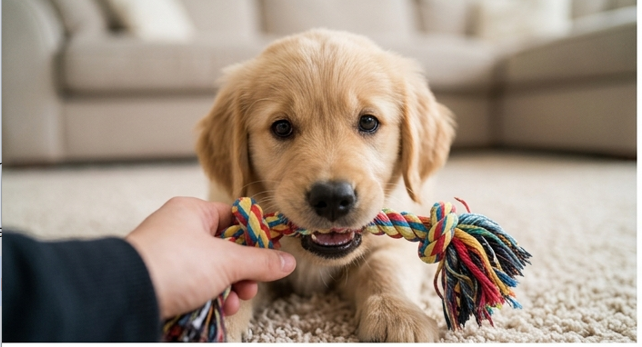
Never leave your puppy without an alternative. If they go for your skin, immediately offer a high-quality chew toy.
- The Swap: Keep a toy in your pocket at all times. The moment teeth touch skin, shove the toy into their mouth.
- Texture Variety: Some puppies prefer soft plushies, while others need hard rubber or cold teething rings. Provide options so the “forbidden” choice (your hand) becomes the least interesting one.
2. The “Reverse Time-Out”
If redirection fails and the puppy is fixated on biting you, you must remove the reward. In this case, the reward is you.
- Step over a baby gate or leave the room for 30 to 60 seconds.
- Do not yell or look at the puppy. Total silence is the most powerful tool.
- This teaches the puppy that biting makes the “fun” (you) disappear.
3. Managing “The Zoomies” and Overstimulation
Many owners find that biting gets worse in the evening. This is often “The Zoomies” or overtiredness.
- Enforced Naps: A tired puppy is a biting puppy. Puppies need 18–20 hours of sleep. If they are acting out, put them in their crate or a quiet pen with a safe chew.
- Mental Stimulation: Use puzzle feeders or “sniffari” walks. Tiring out their brain is often more effective than tiring out their body when you want to stop puppy biting fast.
Common Mistakes to Avoid
If you feel like “nothing works,” check if you are accidentally making these common errors:
| Mistake | Why it Fails |
| Physical Punishment | Smacking or holding the snout shut can make the puppy fearful or aggressive. |
| Rough Play with Hands | If you use your hands as “wrestling” tools, you are teaching the puppy that hands are toys. |
| Inconsistency | If you let them nip sometimes but not others, the puppy will remain confused. |
| Running Away | Squealing and running away triggers the puppy’s prey drive, making them chase and bite your heels more. |
When to Seek Professional Help
While most nipping is normal, some cases require an expert. If your puppy is growling with stiff body language, snapping at your face with intent to hurt, or guarding resources (toys/food), consult a certified positive reinforcement trainer. These can be signs of early arousal or aggression issues that go beyond standard teething.
Summary Table: Action Plan
| Step | Action | Frequency |
| Step 1 | Use “Ouch” for hard bites. | Every time. |
| Step 2 | Redirect to a cold or textured toy. | Immediately. |
| Step 3 | Use a 30-second “Reverse Time-Out” if they persist. | As needed. |
| Step 4 | Ensure 18+ hours of sleep per day. | Daily. |
Conclusion
To stop puppy biting fast, you must balance patience with firm boundaries. By teaching bite inhibition, consistently redirecting to appropriate toys, and ensuring your puppy is well-rested, you will see a dramatic improvement in their behavior. Remember, this phase is temporary. With a proactive approach, your “land shark” will soon grow into a gentle, well-mannered adult dog.